Tibetan Alphabet
History and Letters of the Tibetan Alphabet
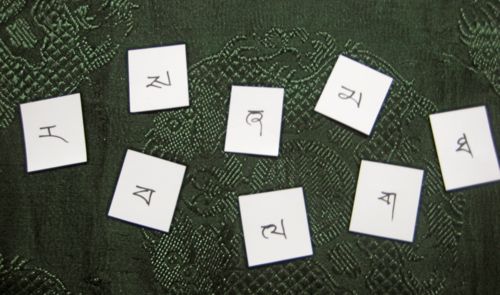
A few letters of the Tibetan alphabet drawn by yours truly.
Who invented the alphabet?
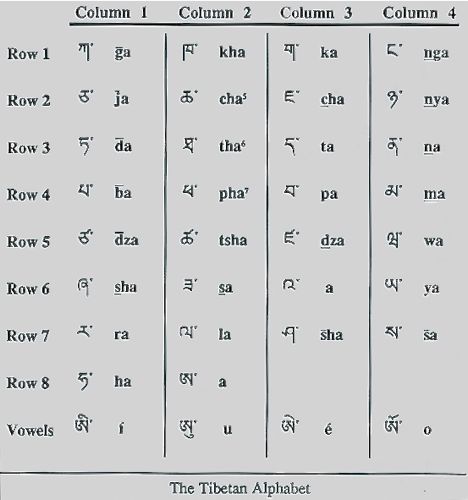
During the 7th Century Songsten Gampo (569-649AD), the 33rd king of Tibet, sent Thonmi Sambhota, one of his ministers to India. The minister then created a script for the Tibetan alphabet based on the Sanskrit Devanagari (language of the gods) model and also wrote a grammar of Tibetan based on Sanskrit grammars. At the time there was no written script in Tibet. All the Buddhists teachings and prayers were passed down orally from teacher to student. The minister studied the Sanskrit language and thank goodness he only took 30 of the 50 consonants and 4 of the 14 vowels!
Do you have a Tibetan Question?
An interesting tattoo story or pic to share?
This is definitely not an easy thing to learn. It’s not as difficult as the Chinese, Hindi or Sanskrit equivalents of course but it takes a little more work than learning most other alphabets of the world. It took me a couple of months of full on studying by using flash cards and trying to trace the alphabet pictures over and over. Correct pronunciation was an extra challenge!
Once the letters are learned it gets more difficult when you begin to tackle the rest of the language! If you are a Buddhist or are interested in reading the original Tibetan Buddhist texts it is well worth the effort to learn this beautiful language.
Also teaching this is not an easy task. A good teacher needs good knowledge of the language, customs, traditions and a bit of Buddhism goes a long way. As well as great patience to teach such a lazy student like me!
When I lived up in Dharamsala, Northern India, a friend of mine once had an idea to tattoo the entire Tibetan alphabet on his arm but soon realized that it would take up a lot of space! Duh...
He finally settled for a Tibetan moon (dawa) tattoo instead. (Please see photo below) Tibetan tattoos (words) can be very beautiful if they are done well. Dawa is also a common name for a male. I've also heard it used for a female but it is much less common. 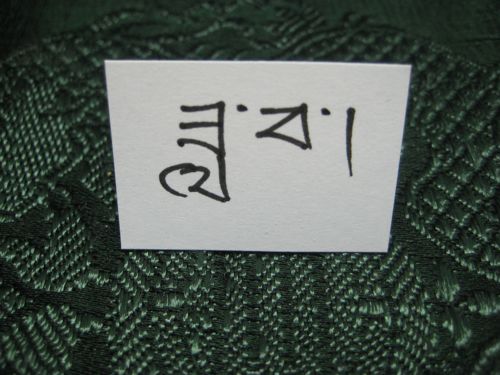
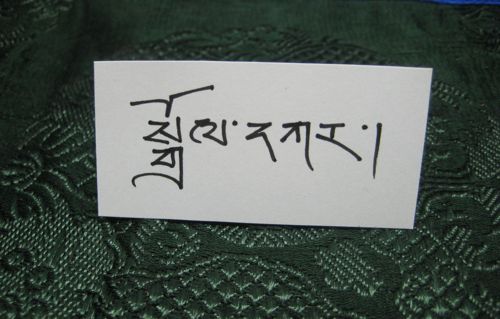
If I ever get up the courage, I would one day like to tattoo ‘Om mani padme hum (hung) on my forearm...or perhaps my Refuge name that I have written below for you. It says 'Drolkar' which means White Tara or Goddess of Long Life. The first syllable 'Drol' represents 'Drolma' or 'Tara' and the second is 'Kar' or 'Karpo' the word for 'white'. Names are frequently cut in half and thrown together like this to make interesting combinations!
Tibetan Translation
My Tibetan Learning Journey
My favorite Tibetan Language Books
Return From Tibetan Alphabet To Tibetan Life Homepage
|
 Subscribe To Tibetan Life News!