Yoga Symbols
by Rajeev
(Pune, India)
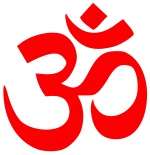

In order to understand the culture from which yoga has come from the Hindu Dieties. Many yoga teachers and practitioners are not practicing Hindus, but do honor the culture and religion from which yoga comes from, and sometimes display statues of the hindu dieties in their homes or yoga studios.
Brahmâ is the Creator or Organizer; Vishnu is the Preserver, who maintains and supports the world; Shiva is the Destroyer. Of these three, spring many other incarnations of Gods in animal and human aspects. Yoga is tied to hindu traditional lore in the sense that yoga asanas (poses) are named after some of these aspects.
Examples of yoga asanas that relate to legend are:
Matsya (the Fish). This incarnation of Vishnu as a fish gave Him the opportunity to teach Manu , the first man, how to build a boat.
Matsyasana and navasana are fish and boat pose respectively.
Kûrma (the tortoise). Under this turtle form, Vishnu plunged in the ocean deepness, to get and bring back to the surface, bearing it on His back, the Mount Mandara . This mount was then used as an axis by gods and demons to churn the original Ocean of Milk and extract the amrita (or nectar of eternal life) from it. Kurmasana is the tortoise pose.
In this introduction to hindu deities, we start with Ganesh. Ganesh is, above all, the Protector, the One who is invoked before any undertaking, any beginning. Ganesh is an extremely popular God in India. He is called Vighneshvara or Vighnaharta, the Lord of and destroyer of obstacles. People mostly worship Him asking for siddhi, success in undertakings, and buddhi, intelligence. He is worshipped before any venture is started. He is also the God of education, knowledge and wisdom, literature, and the fine arts.
Lord Ganesh or Ganpati is considered a symbol of wisdom and a bringer of good luck. It is said that his elephant head epitomises everything related to wisdom-small shrewd eyes, long ears that miss nothing, a long nose that can smell out anything and his vehicle, a mouse, reflects how much importance a wise man gives to the smallest of life forms. Shown at gateways and on doors generally facing the rising sun in the east, Ganesh is revered across India as a great clearer of obstacles.
Meetings, gatherings, weddings, functions and celebrations begin with a prayer of lord Ganesh and no new venture-be it a new company, a new house, a new shop is inaugurated without reciting a 'mantra' of lord Ganesh.